


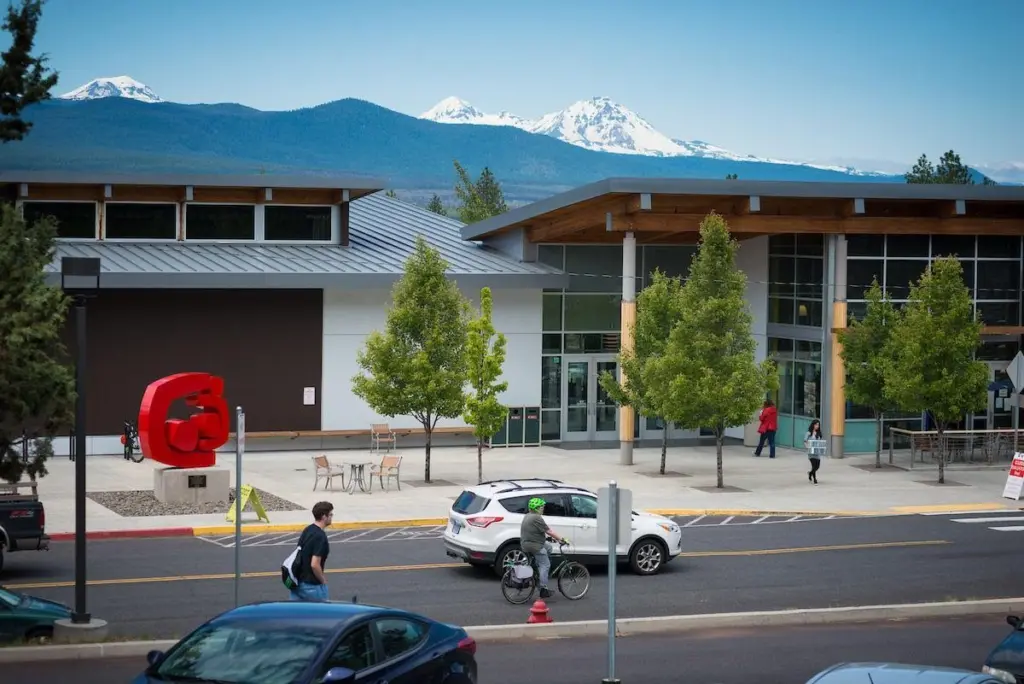
Facing pending budget cuts at the state level for the 2025-27 mid-biennium — likely 2%, but as much as 5% — Central Oregon Community College is welcoming community advocacy in encouraging state lawmakers, whose next session begins Feb. 2, to maintain current funding levels.
Interested citizens can visit tinyurl.com/StandWithCOCC to learn more about the forecasted budget changes and add their name to a “Stand with COCC” petition.
While the cuts, driven by anticipated revenue shortfalls, would impact all of Oregon’s school districts and state agencies, eliminated funding would have an exaggerated impact on COCC above all other 16 community colleges, explains COCC President Dr. Greg Pereira.
“Because of the funding formula used by the state’s Higher Education Coordinating Commission, COCC receives less state funding and more property taxes compared to other community colleges, approximately 70% property taxes versus 30% state funding of total public resources,” Pereira said. “So any cut would have a disproportionate impact on our 2026 fiscal year, and it could be as much as $1.5 million per year.” A similar reduction could occur in fiscal 2027.
Cuts of this size, COCC estimates, would impact things like course availability, staffing levels, workforce programs in areas like early childhood education, health care and public safety, along with a reduced ability to operate rural centers and engage in community outreach. The 5% reduction scenario would include a state freeze on new Oregon Promise enrollments, a state grant that currently helps cover tuition costs for 669 COCC students.
“We’re advocating strongly for education — and we need our community’s voice with us,” added Pereira, who said COCC is actively engaging with the Oregon Community College Association and state leaders to encourage advocacy. “This isn’t just about COCC. It’s about the health, safety and economic future of Central Oregon.”
Associated Students of COCC President Talia Stockwell is putting her name on the college’s petition letter. “COCC provides life-changing opportunities for students like me,” she said. “With looming budget cuts to community colleges across the state, these opportunities are at risk.”
State investment, in turn, furthers economic growth and community stability. The most recent data available from Lightcast, a global leader in labor analytics, reported in 2023 that COCC’s operations, alumni and student spending generated $289.6 million in added income for the district’s economy, equivalent to supporting 3,562 jobs.
For more information, contact Lucas Alberg, COCC’s director of marketing and public relations, at lalberg@cocc.edu or 541-383-7599.